Solid model of wcubed Pocket NC vise

Some time ago I wrote about using the wcubed vise for the Pocket NC. While I don’t end up using it very often any more, mostly because I rarely work with rectangular stock, it can be useful from time to time. Unfortunately, it is no longer manufactured. In case anyone is interested in replicating it, I’ve taken at least a minimal stab at modeling it up based on measurements of my unit along with necessary hardware as picked from McMaster. I suspect the model should be good enough to get something that works.

customizable PWM rate for moteus

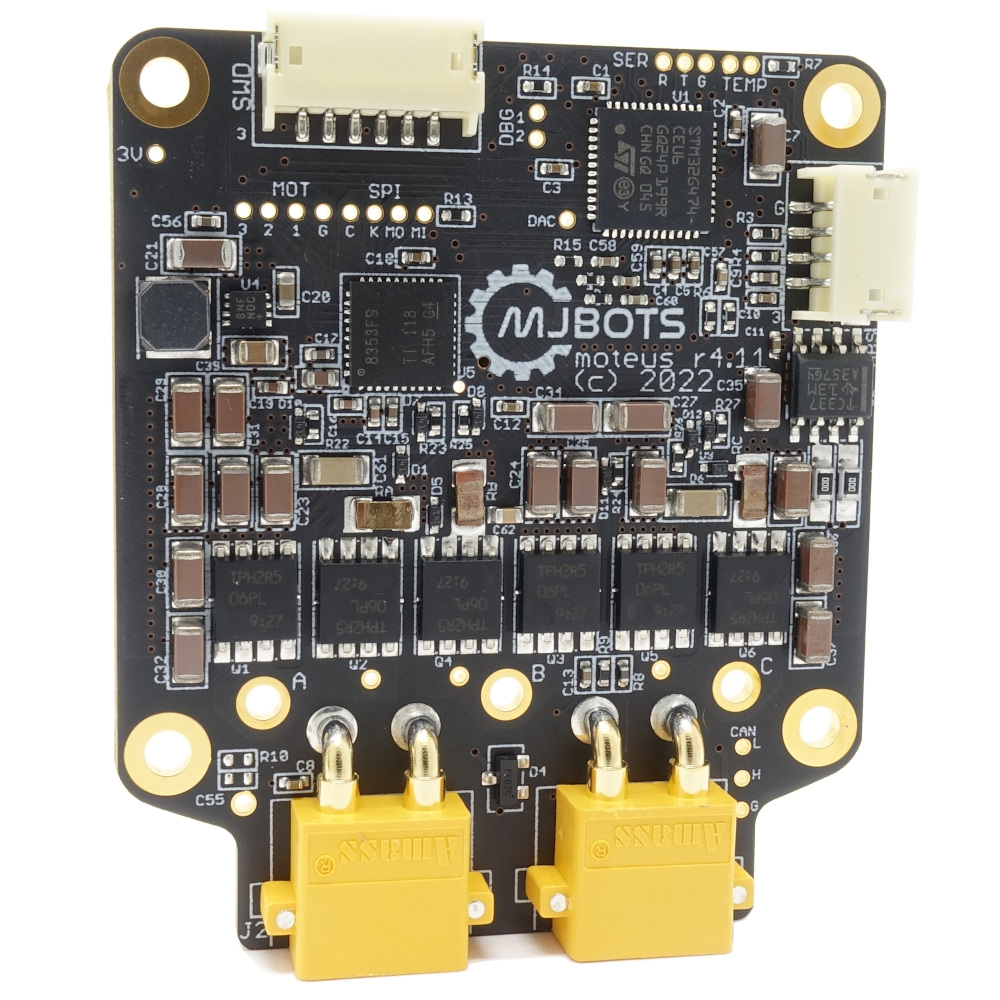
Being a switch mode 3 phase motor driver, the moteus controller changes the current flowing through the phases of a motor by rapidly switching the phase terminals between the positive input voltage and the input ground. The control of this switching is denoted “pulse width modulation”, or PWM for short. To date, the rate at which it has switched has been fixed in firmware at 40kHz. As of release 2022-03-12, this can now be altered anywhere between 15kHz and 60kHz to better optimize peak power capability, control bandwidth, maximum speed, and heat generation.

external primary encoders for moteus

With the r4.8 release of moteus, a not-yet-announced feature was included – the ability to have an off-board primary encoder! It didn’t get announced at the time, because the connectors necessary to populate the board were not obtainable. In fact, that is still the case, but I’ve located a substitute part which works well enough, so here we go!

Theory

The moteus controller uses an absolute magnetic encoder to determine the relationship between the rotor and stator of the motor at each given instant. That allows it to produce torque in the motor at any speed, from standstill to the maximum possible speed. Until now, the only magnetic encoder that was supported is the one mounted to the backside of the board. This is largely acceptable, as moteus is intended to be used in integrated applications.

New machine day: A manual lathe

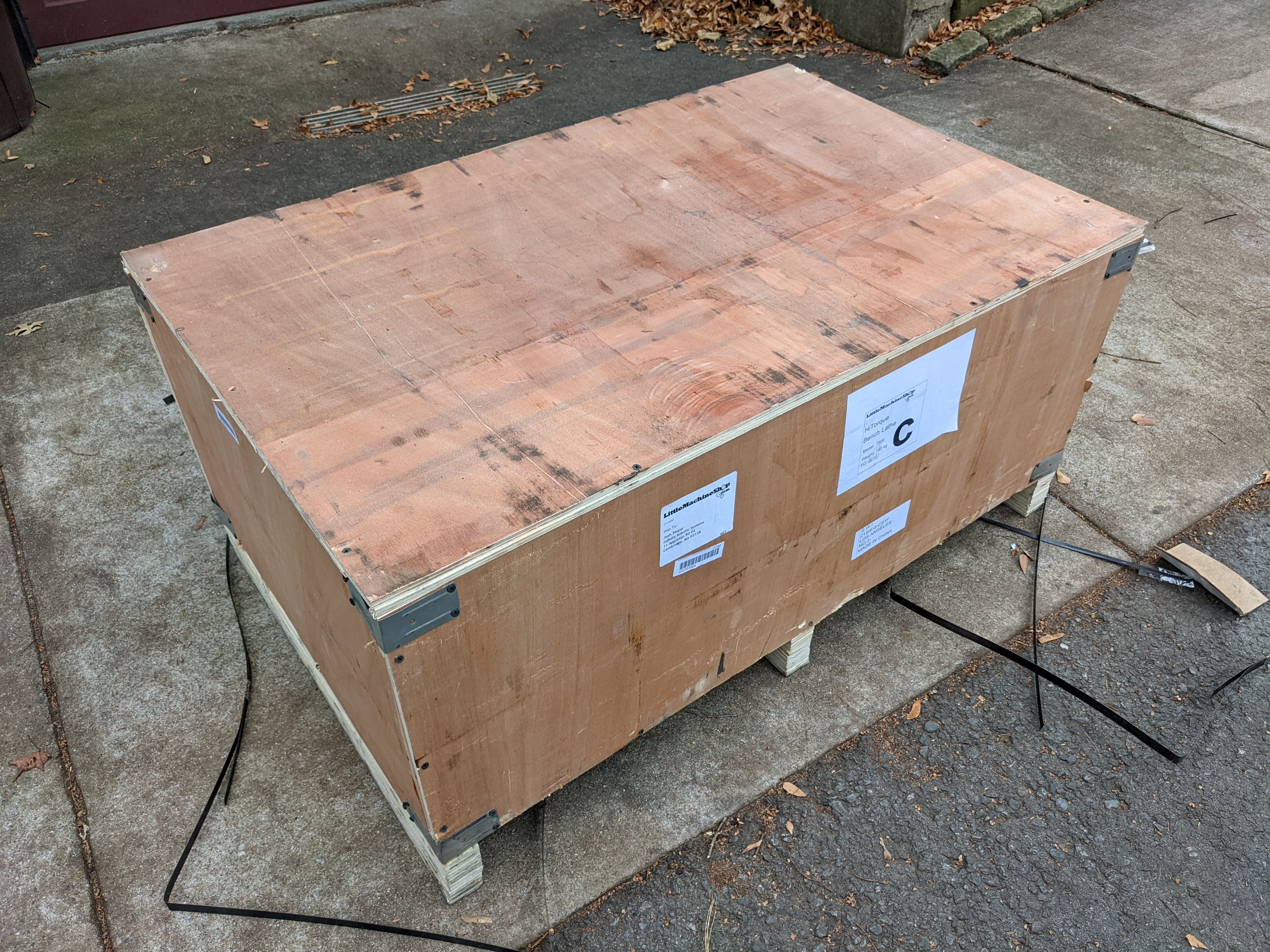
With the Artisan’s Asylum closed for a relocation, I’ve been without access to a manual lathe for a while. Fortunately, import mini-lathes aren’t that hard to come by!

What’s inside?

What’s inside?

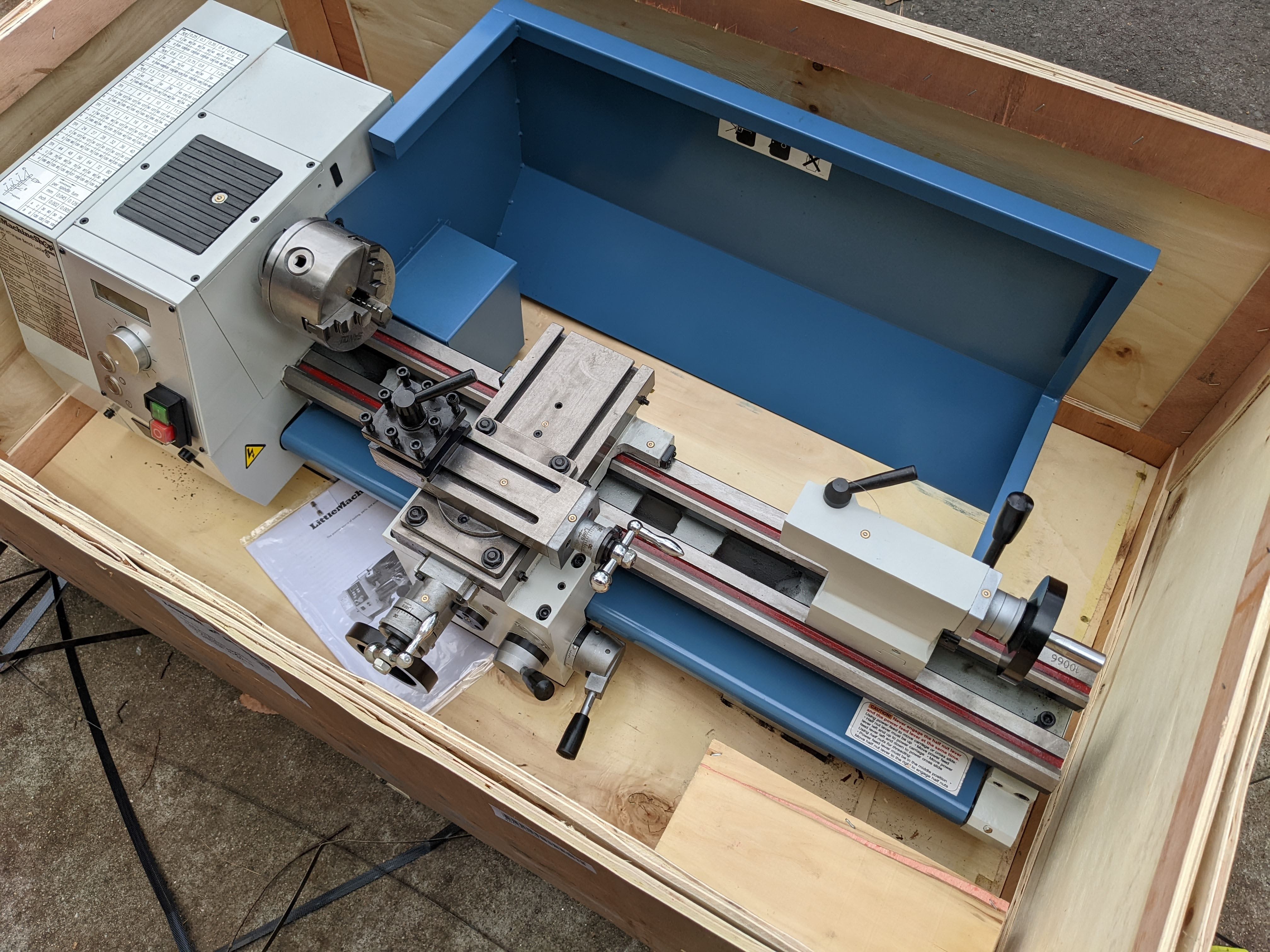
Well, look at that!

Well, look at that!

This is a Sieg C4 derivative from Little Machine Shop, which was about the largest machine I could reasonably move into my basement.

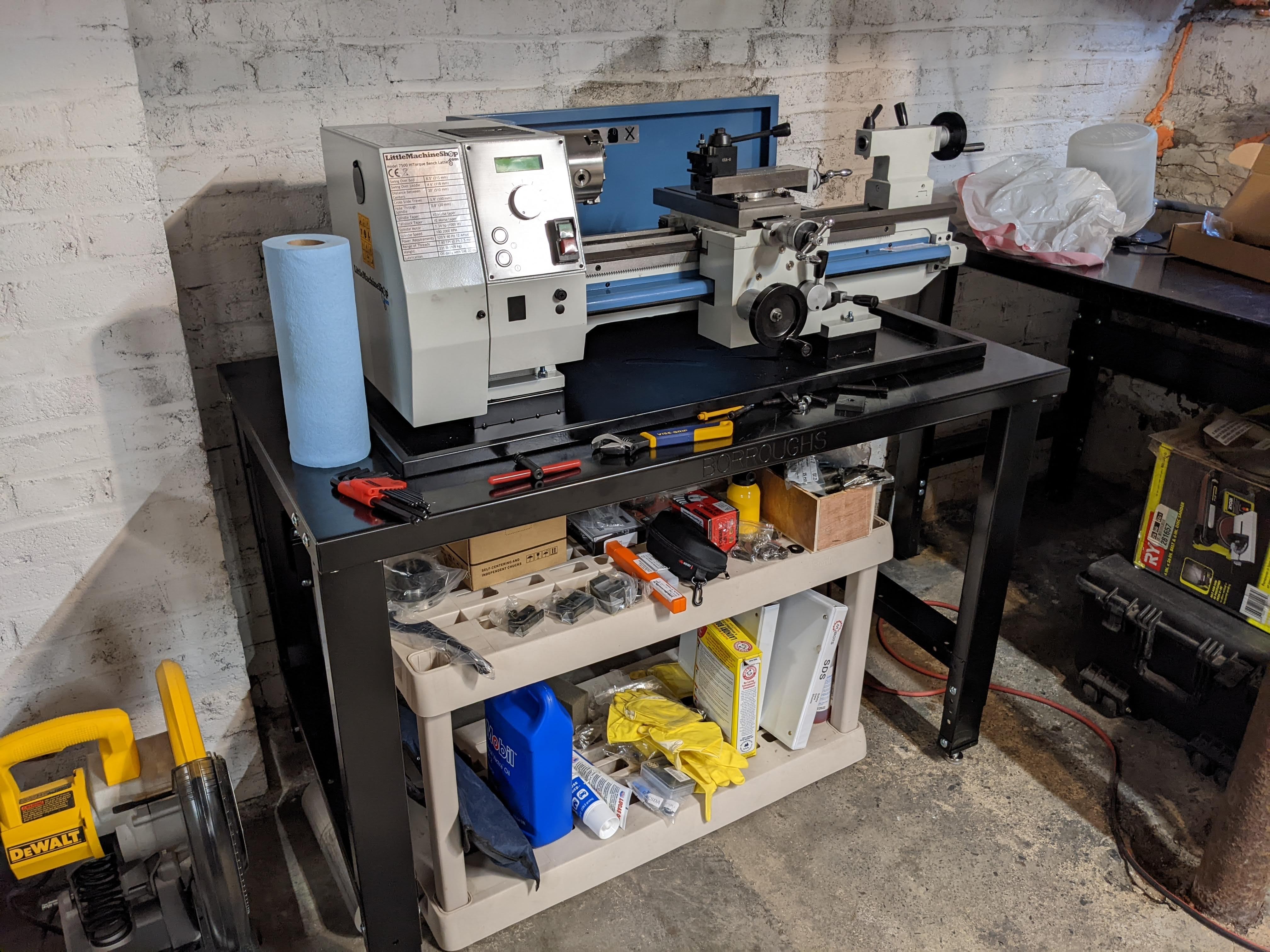
All set up

All set up

It isn’t as rigid as the Colchester at AA was, but it does have power feed and power cross feed which both work just fine. I’ve run into a few minor quality issues, and the spindle runout isn’t great, but it should do for my needs.

Fixed voltage mode for moteus

The most recent moteus firmware release, 2021-12-03, added not one, but two new control modes for less common applications. Previously, mentioned was the “voltage_control_mode” for using gimbal style high resistance motors without changing the sense resistors. In this post, I’ll describe a similarly named, but very different mode “fixed voltage mode” for operating brushless motors as if they were a stepper motor.

For some applications, you don’t care about torque control, or about power consumption at all. Traditionally you would use a stepper motor in those applications, with a correspondingly less expensive stepper motor driver. However, in some cases you may still want to have high rate trajectory control, CAN based telemetry, or have already standardized on moteus controllers for other moving parts of your solution. There are two new options that can be used in such situations:

pi3hat firmware and python release 2021-11-29

There’s an updated release out for the mjbots pi3hat which features a useful bug fix and a minor feature.

First, the configuration of automatic retransmission was broken in several ways. The symptoms for previous versions would be that any attempt to change the CAN configuration for a bus would result in all channels attached to that controller having auto-retransmit turned off. Since it was by default on, that would typically result in a decrease in transmission reliability, and in some particular cases with arbitration conflicts, could result in frequent packet loss. Fixing this requires updating both the firmware on the device and the C++ and python libraries. Fortunately, this would only come up if you were communicating with non-moteus devices using the pi3hat, which likely isn’t that common.

Voltage mode control for gimbal motors

The moteus brushless controller can drive many motors out of the box, but until now it has been challenging to use with gimbal style brushless motors. They are wound with thin wire so that they have a very high winding resistance, and thus can be driven by inexpensive low current controllers. Using something like moteus with a gimbal motor isn’t absolutely necessary, but does give benefits in terms of high performance trajectory tracking and torque control.

AS5600 support for moteus auxiliary encoders

The initial implementation of auxiliary encoders for moteus supported exactly one encoder, the AS5048B. The hardware can support any I2C based encoder, so supporting additional encoders has always been on the TODO list.

I’m excited to announce, that as of firmware release 2021-12-03, AS5600 encoders are now supported as well. They are a lot cheaper than the AS5048 as they have a much lower update rate and resolution, but that isn’t necessarily a problem if it is only used to disambiguate a modest gear reduction.

Improved moteus_tool calibration

To use the moteus brushless controller with a motor, you first have to calibrate it with moteus_tool (for history, see “Encoder autocalibration” and “Auto-tuning current control loops”). This calibration process is primarily used to measure the mapping between electrical phases and the encoder, but as a secondary parameters also measures the winding resistance and Kv of the motor and determines the parameters necessary to set the current control bandwidth.

Motivation

To date, this process can be used with any motor, but making it work can involve fiddling with a number of inscrutably named command line parameters to moteus_tool. --cal-power, --cal-voltage, and --cal-speed are all there, however they don’t really do what you think based on their name, but it is necessary to adjust them to make many motors work.