Archives: Moteus

First walking on the full rotation quad

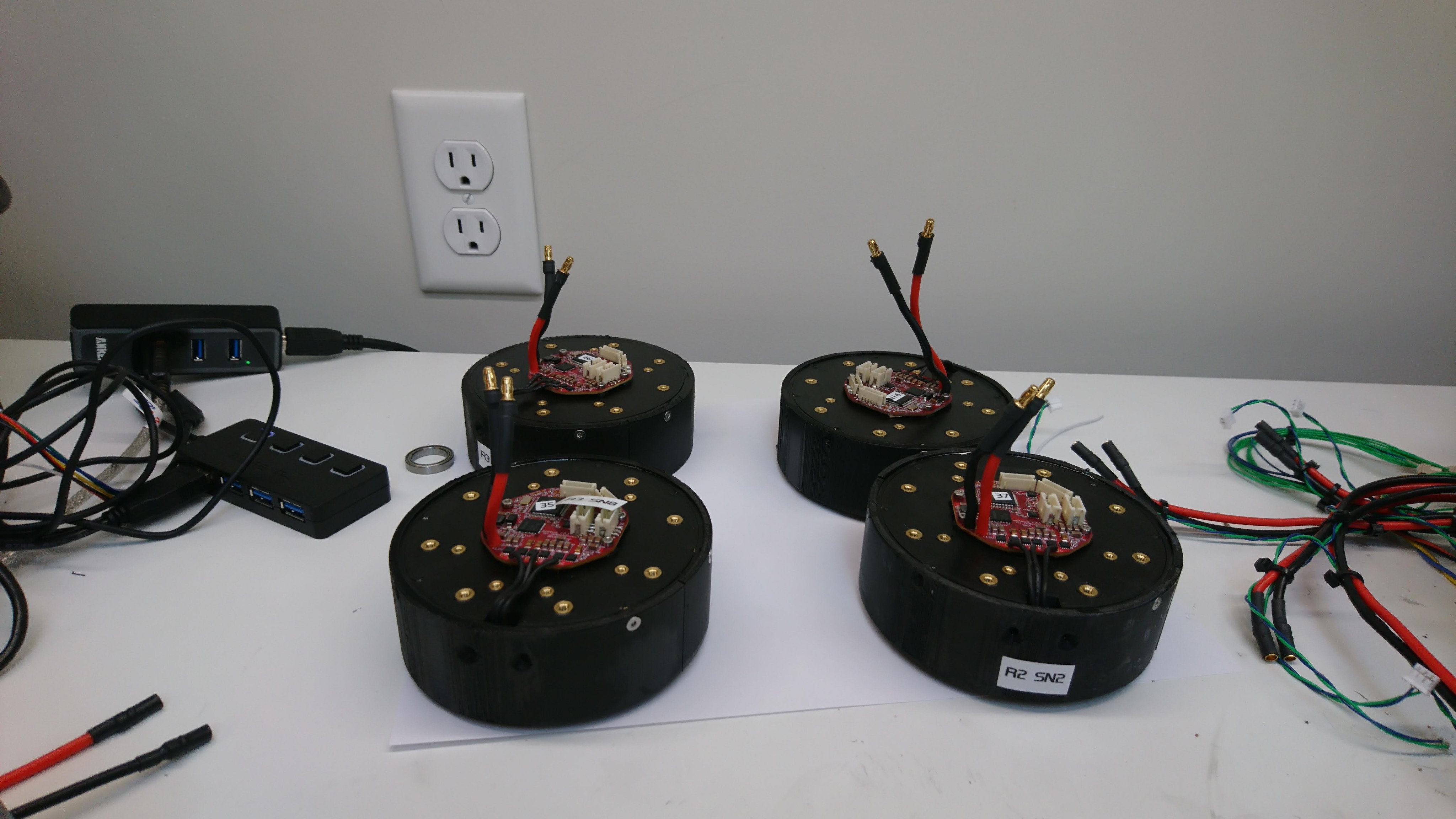
Last time, I had finished physically assembling all the motors for the updated quadruped with legs that can rotate freely 360 degrees.  After the long summer break, I powered up and configured all the servos.  Then, after setting up the gait engine for the new configuration (for which there are still a TODOs when the lateral shoulder offset is non-trivial as in this configuration), I was able to achieve some amount of walking.  Here is one of the first videos I took, without much in the way of tuning or work.  The control is a little wobbly still, but so far there are no signs of any mechanical failures as with the older design.

Machining a sun gear holder on the Pocket NC v2-50

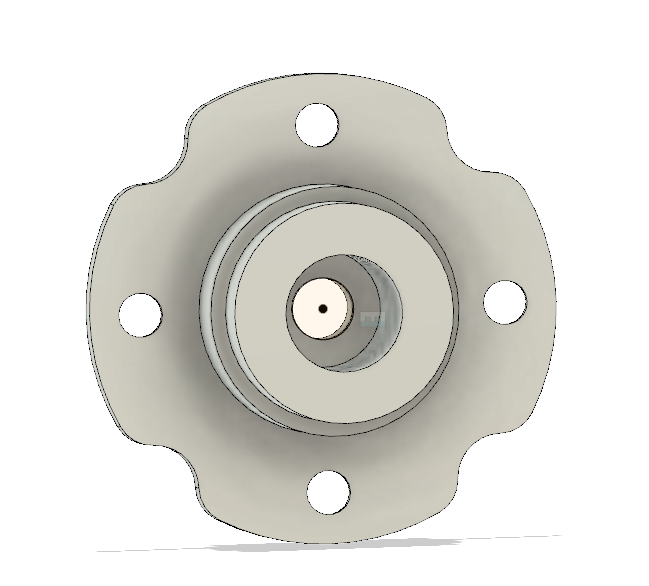
After doing my first cuts in aluminum, I wanted to actually try and make a real part, to prove that the Pocket NC v2-50 was capable of making things that I can actually use.  My first attempt, was the same part I did my first aluminum cuts in, the sun gear holder from the BE8108 planetary gearbox.

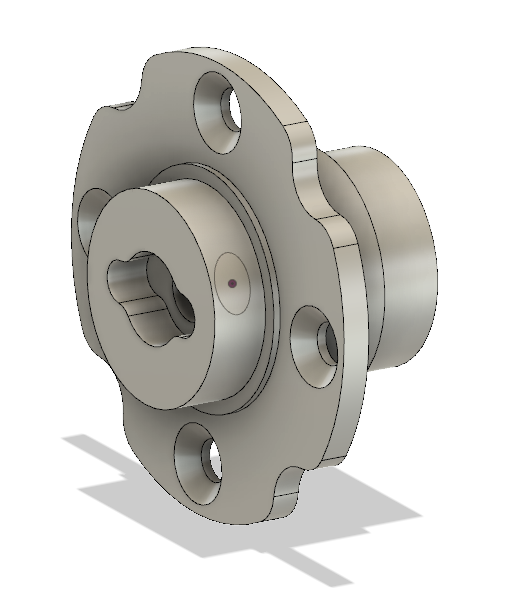
This part attaches to the rotor, the sun gear, the position sense magnet, and has bearing interfaces to the planet input and the back housing.  While not terribly big, the number of features and mating surfaces is relatively large.

Stripping the coaxial quadruped for parts

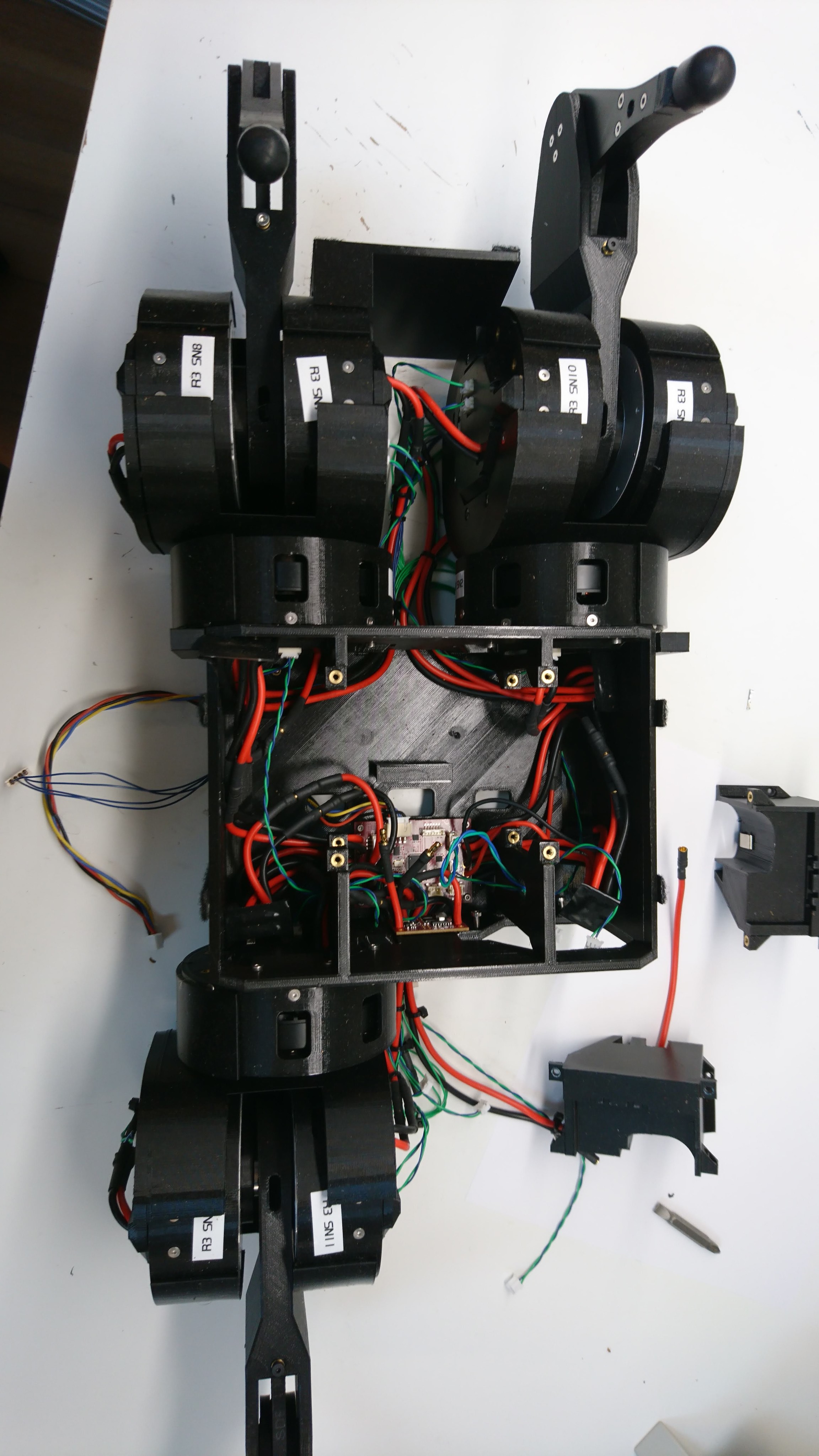
To switch to the full rotation gear design, I needed to get all my gearbox motors, some bearings, and a lot of other bits and pieces disassembled and ready for re-use.

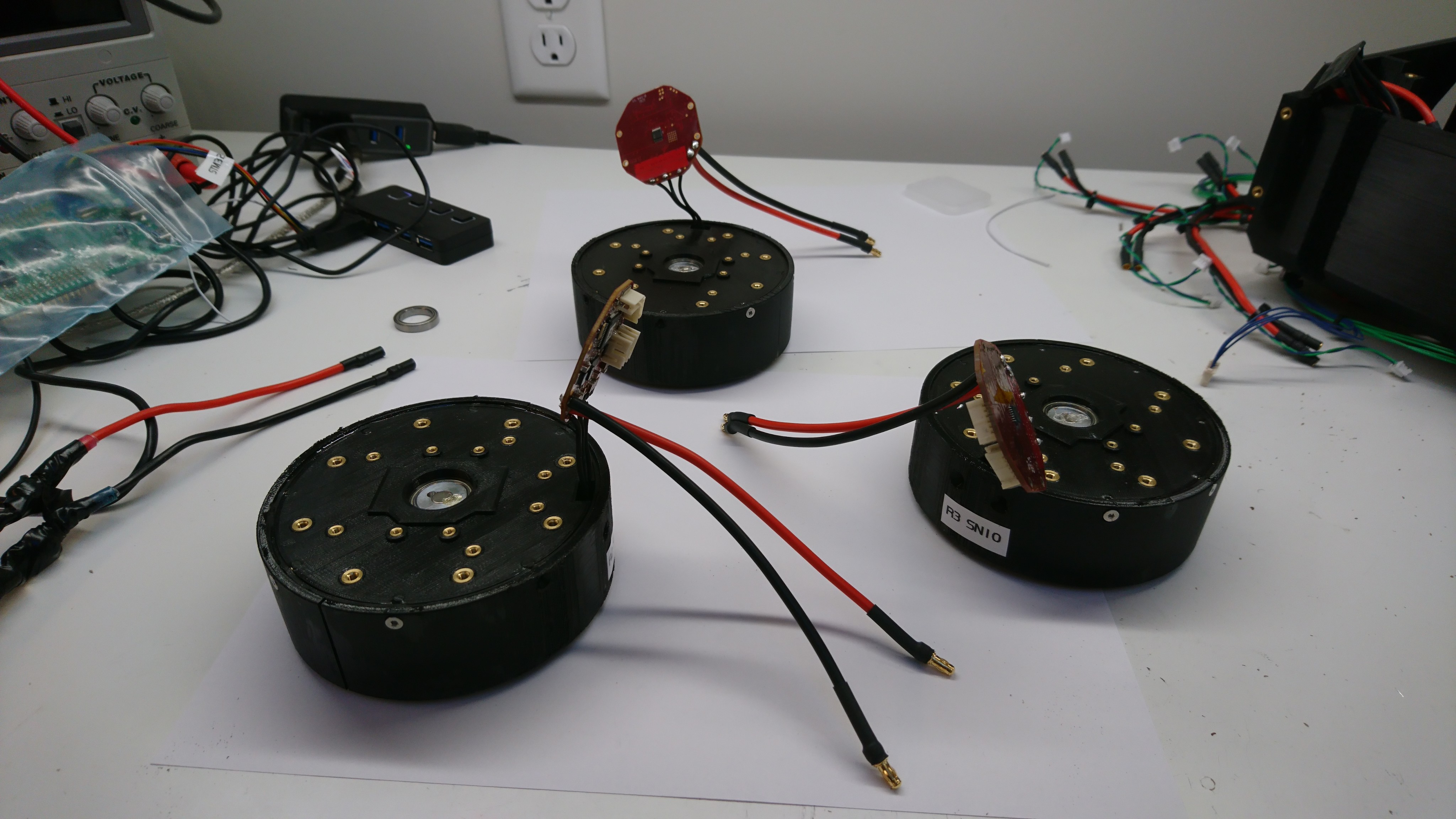
The remaining 3 non-broken legs from Maker Faire

The remaining 3 non-broken legs from Maker Faire

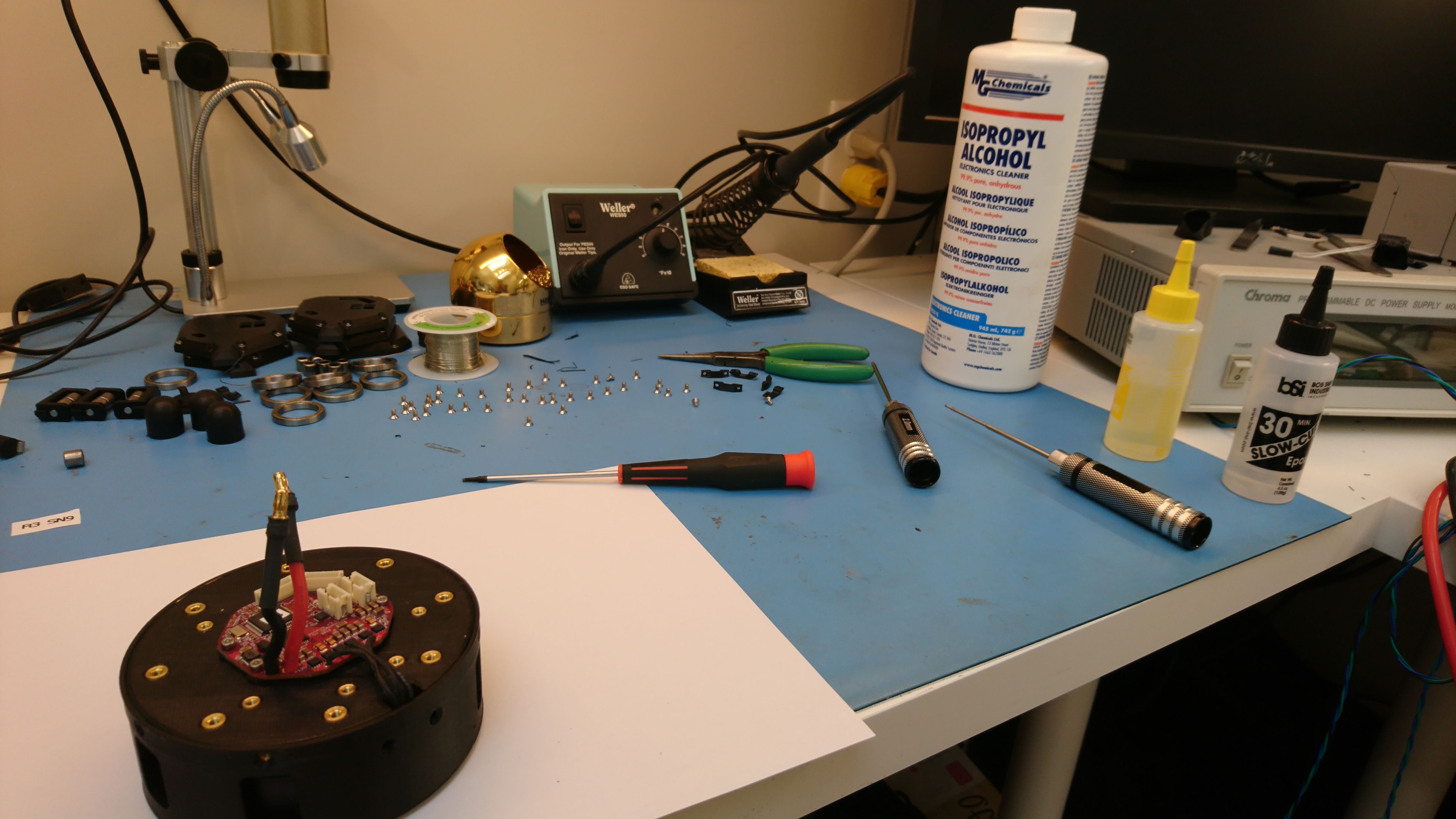
Taking everything apart took a surprising amount of time, nearly a full day.  Each leg resulted in quite a collection of fasteners.  Seeing them all in one place made me realize how complex this has become!

Working around motor shroud failures

As seen at Mech Warfare 2019, the existing gearbox motor shroud isn’t really up to the task of supporting the weight of a 20lb robot.  While I work on a more comprehensive redesign, I’ve got a short term fix in the form of another 3D print.  This is just a simple reinforcing ring, printed at 3mm thick, with the layer lines oriented so that layer separation will not be the primary failure mode.  It is attached to the outer housing via a thin layer of epoxy.

Making things walk - and failing

Now that I could stand up and sit down, I needed to be able to walk reliably for the length of a match.  This wasn’t going to be easy because the direct drive motors were always a bit marginal in their power output to support the full robot, so I had my work cut out for me.

The short story is, I tried many things, spent about a day examining high speed video of walking, and made some improvements:

Standing up and sitting down

Before SMMB could function in the Mech Warfare event it needed to be able to start and stop unattended.  That meant standing up and sitting down on its own.  Being that hack that this was, I went for a two pronged approach.

The direct direct servos I have for the upper and lower legs are somewhat underpowered for this size of robot.  Especially so when the machine is fully squatting down.  Also, the servos aren’t really encapsulated at all, and there are plenty of leg configurations that can self-intersect resulting in robot harm.

pre-charge circuit

Next up in Super Mega Microbot 2’s existence is being able to run untethered.  Before that can happen, I need to be able to plug in a battery, and hopefully not have everything explode.  As seen with the IMU junction board, even minor inductive links can result in chips getting toasted.  I had thought that just adding sufficient capacitance to each of the point-of-load converters would resolve the issue, but in fact that almost made it worse.

rpi3 interface board

Now that I have a chassis that can walk a little bit, I need to get the onboard computer working.  To do that, I needed to update the raspberry pi 3 daughterboard I built for the previous turret for the new bus voltage and communication format.

The rpi3’s UART is incapable of controlling the direction line on the RS485 transceiver, so I added a small STM32 micro in line to control the transmit / receive direction.  It adds a little bit of latency, but testing the firmware I was able to get it down to only a byte’s worth or so.

First walking with gearbox chassis

Short recap: After building the quadruped with near-direct drive motors, I discovered that the lateral servos had insufficient position control authority to keep the robot standing up.  Thus I embarked on a now month long quest to design and build an integrated planetary gearbox.  At this point, I have enough gearboxes built for all the lateral servos, so it should be able to walk, right?

And tada!  It can!  Well, at least a little bit.  I’ve only spent a short while with the gearbox based chassis, and have a lot of work left to do.  However, here’s a quick video showing it walking around, slipping on a ruler, and almost falling over a few times.